
Alex Laval
Content Lead
30 years of energy. Canford's renewable legacy.
Canford has been generating renewable energy for nearly 30 years. tem makes sure none of that value gets lost on the way out.
Canford Renewable Energy has operated a power station in Dorset since 1997. Today, their site generates electricity from landfill gas, solar panels, and a private supply line to on-site businesses. Since working with tem, Canford's generation is priced and managed through infrastructure built to remove the wholesale market layers that erode value for most generators, so the revenue their site produces is actively protected, not passively handed to the market.
Since working with tem, we have experienced increased revenue from our generation alongside reduced import costs, creating a clear financial benefit for the company.
Rob Dowding, Renewables Manager
Location: Wimborne, Dorset | Generation Type: Landfill gas + Solar PV | Annual Generation: ~15.4 GWh |
|---|
A site that refused to stand still
Canford started with a simple enough model: capture the gas that naturally escapes from a landfill site and use it to generate electricity. Seven engines, running continuously, burning what would otherwise be a waste product. It worked well.
Then, in 2010, the landfill closed and was sealed off. The gas supply began to decline - slowly, but inevitably. Most sites in that position would have started winding down.
Canford did the opposite.
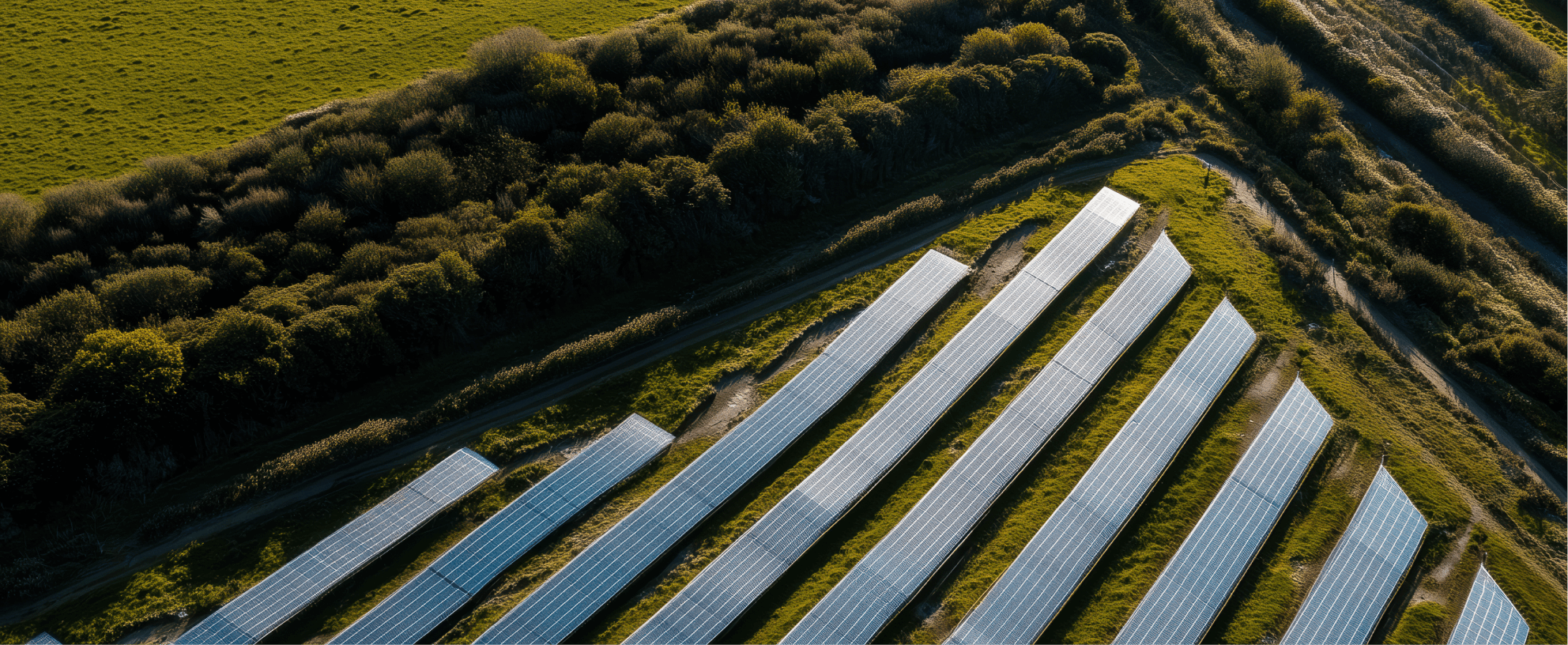
The sealed landfill had something more valuable than gas: a grid connection. Getting permission to connect a new site to the electricity network today takes years and costs a significant amount of money. Canford already had one. Rather than let it sit partially used, they installed solar panels across the capped land and built a private wire - a direct electricity supply - to businesses operating on the same site.
The result is a site that now earns from multiple sources simultaneously: gas engines when the gas permits, solar when the sun is out, and a direct commercial relationship with on-site tenants who take power without it passing through the wider grid at all.
"We chose to work with tem because of their expertise in renewable energy markets and their hands-on approach to maximising the value of our generation assets."
Rob Dowding, Renewables Manager
Why running multiple generation sources makes commercial life harder
Generating electricity from one source is straightforward to manage and sell. Running three or four different technologies off the same grid connection is a different problem.
The solar output changes with the seasons. The gas output declines gradually year on year. The on-site businesses take power directly, which reduces what gets exported to the wider grid. And the hydrogen production facility on site adds another layer of demand that has to be coordinated against everything else.
Meanwhile, wholesale electricity prices - the price at which exported power gets valued - move constantly. A good month and a bad month can look very different.
At 15 GWh of annual generation, a 5% improvement in the price Canford receives for its exports is worth tens of thousands of pounds per year. Passive fixed-price contracts - the kind most generators are offered as standard - don't capture any of that upside. tem actively manages when and how the generation is sold to make sure Canford gets the best achievable price.
One commercial position, not three separate contracts
Most arrangements treat landfill gas and solar as separate deals. They get priced independently, sold independently, and reported independently. That's administratively tidy, but it's commercially wasteful.
tem prices Canford's site as a single entity. The gas engines, the solar panels, the private wire, and the arrangement that allows the on-site hydrogen facility to access green power — all of it is coordinated against the same view of the wholesale market. When solar is strong, that affects how gas output gets timed. When wholesale prices spike, that affects how exports are structured across the site as a whole.
The alternative - treating each technology in isolation - consistently leaves money on the table.
"Working with tem has felt more collaborative and proactive than typical industry experiences. They provide clear, transparent guidance, anticipate market challenges, and offer practical solutions."
Rob Dowding, Renewables Manager
What active management actually means
Optimisation is an overused word. In this context, it means specific things:
The surplus grid capacity Canford holds - capacity that took years to secure and would be nearly impossible to replicate - is fully used rather than sitting idle. Revenue comes from more than one source, which means a bad month for gas doesn't automatically mean a bad month for the site. Exposure to sudden wholesale price swings is managed rather than absorbed entirely. And the long-term planning that renewable sites need - the kind that justifies maintaining infrastructure and exploring new uses - rests on a foundation of predictable, transparent returns.
"Transparency and stability in pricing are critical because they allow operators to plan long-term investments and operational strategies with confidence."
Rob Dowding, Renewables Manager
When the price Canford receives for its generation is actively managed and clearly explained, the site has a stable financial foundation to build from. That's what they've built. tem is the infrastructure underneath it.
Operating a multi-technology renewable site?
tem works with generators from single-asset projects to complex, integrated energy hubs.
Transparent pricing, active performance management, multi-technology optimisation.
tem.energy - Let's talk.


